Wednesday, September 14, 2011

Too Much Free Time

Today is the 2nd day in a row where I have been unable to aquire a substitute teaching job.

My district uses Aesop, an online sub placement system. The requirement to become a substitute teacher is to have 90 or more college credits, however some schools in the district do requrie a teaching certificate. This means that any college students searching for education experience can get it before they graduate through Aesop.

In my opinion, there are pros and cons to this system.

Pros:
  • It gives new teachers, like myself, a chance to prove themselves in the class.
  • It streamlines the system. I do not have to individually register with schools or districts to sub in them.
  • Teachers can request individual subs – I made a good impression last week, and as a result have a job lined up for this coming Friday.
Cons:
  • Experienced subs probably don't like Aesop because younger punks like myself take away their seniority.
  • It seems like there are a billion other subs out there competing for the same jobs. While good for schools, its tough for subs. An opening became available last night. I knew the teacher, school, and subject material. Within 5 seconds somebody else got the job.
  • There is no longer the 5:30am phone call. To get jobs, I need to leave my computer on through the night and have Jobulator ring when a position opens. While its a good way to ensure a job for the coming day, it makes for very poor sleep.
Overall I'm happy with it, however it is frustrating that I am unable to work steadily. My presumption is that as the school year progresses, a couple things will happen:
  1. Teachers will take more days off - unless its an emergency, most teachers are probably going to be at work for the first two weeks of school.
  2. There will be less sub competition - I'm betting subs are likely very eager to take jobs right now. As the year progresses, I assume this will fade, especially as some of those 90 credit college students realize this job may not mesh with their schedule or stress intake.
  3. Teachers will request me - When I do get jobs, I focus on making a great impression. I follow the plans, try to build rapport with students, and chat with the secretaries and neighboring teachers. Most importantly, I leave a detailed sub report on letterhead that gives my personal contact information - all of this with the hopes of getting called back in the future.
I realize this is just part of the trade, and not every day will be filled. It's frustrating, but as the weeks go by, I'm sure my body and frame of mind will adapt.

This free time has given me a lot of opportunty to search the web! Here are some great resources (teaching and otherwise) that I have stumbled upon:
  • Two Writing Teachers: inspired teaching strategies that focus on how to successfully bring writing into the classroom
  • Cool Cat Teacher Blog: A wide spectrum of engaging material, from the newest research to proven methods and ideas
  • Education Week – Politics K-12: The most current news and analysis in national education
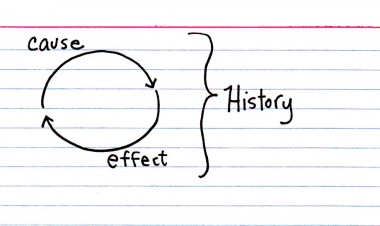
  • This Is Indexed: Venn-Diagramming the social world on an index card. Sometimes hilarious, sometimes heart-wrenching, always interesting. (Also great to throw into your Bag of Tricks!) Here is one of my favorites:
  • Reflection Of Me: Highly entertaining, because a picture is worth a thousand words.


I invite you to contribute by sending in questions, personal stories, thoughts, and articles about substitute teaching. Thanks for stopping by.

Monday, September 12, 2011

What Doesn't Work: "Guys"

There are words that substitute teachers definitely shouldn't say. Most of them are four letters. The most atrocious, sexist, and wildly overused is the word GUYS.

Why it doesn't work:
Unless avoiding "guys" is within your active consciousness, you probably use this word far more than you think. Here's a scenario:

So you've greeted students at the door, engaged in casual conversation before class, written the schedule on the board, and now the bell rings and you need to get their attention. You stand up and say “Ok guys lets get started...”

You then introduce yourself, explain why you are filling in, and then move on to the assignment. “So what your teacher would like you guys to do is...”

As students begin working, you notice a group of students isn't on task. You go up to them individually. “Hey guys, could you please...”

On and on. Students will pick up on it. Using this one word, over and over again, establishes that you don't know anybody's name – and that you also have a very limited vocabulary. It makes you look inexperienced and amateurish, and opens you up for a host of issues.

How to fix it:
Use other words. It's difficult; the word “guys” has become such a staple to our daily language. But there are tons of them. Here are my suggestions:
  • Folks
  • Friends
  • People
  • Men, Gentlemen, Dudes, Boys
  • Women, Ladies, Dudettes, Girls
Other tips of advice:
  • Learn some student names before class begins. When you address a student by name, it shows them and everyone else in the class that you actually are relevant to them.
  • Find other ways to gain student attention. More of this in the future.
  • Whenever you are about to say “guys,” think of Sloth from The Goonies yelling "Hey You Guys!" This will probably make you reconsider your word choice.

Saturday, September 10, 2011

What Works: Greeting Students

There are some things that work in the classroom, and some things that just don't. That's what this blog is all about.

Our first What Works segment: greeting students as they enter the class. It may sound obvious, or unecessary, or unnatural, depending on your personality. Believe me. Just do it. It works.

Why it works:
Greeting students as they enter establishes yourself as the leader of the class. If students walk in and see you averting your eyes, pretending like you are busy, hiding behind your desk, etc., they do not view you as a leader. They may not view you as a coward, but definitely not as a leader. You may be able to establish it later on, but why bother? Just do it as they enter. It makes it easier for everyone.

Better yet – be standing out in the hall as they come in. That way they'll see you as they approach, rather than after they come in expecting to find their teacher.

How to implement it:
Say “Hi.”

Other tips of advice:
  • Use this opportunity to learn some names.
  • Engage in casual conversation if appropriate. “I like your shoes” or “nice Iron Maiden t-shirt, I saw them live in 1983” work well.
  • Greeting students allows you to possibly identify the potentially troublesome kids. They don't always make themselves clear, but sometimes they can (like if they're wearing an Iron Maiden t-shirt). Learn their name and engage in casual conversation to help quell any potential issues.
Congratulations! You are now off to starting an excellent class period.

Q. What do you do to establish yourself as the leader of the class before the bell rings?

Thursday, September 8, 2011

Truth in Every Joke

As teachers, we talk a lot about asking better questions. I do not mean to diminish the importance of this topic - teachers must focus on asking excellent, thought provoking questions to build deep inquiry and colloboration among students.

But something happened recently. Based off of a student's excellent question, hidden within an ironically racist joke, I began to look at this topic a different way:

what can we do to encourage our students to ask better questions?


The class was African American Studies, and this particular hour was great for a sub. The kids were older (mostly 11th grade), socially adept, collaborative, fun, and active. Literally everybody got along with everyone else. They were also respectful towards me, granted I did have to be a little loud and unconventional to get and hold their attention. It was a really fun hour of my day.

There was about 15-20 minutes left at the end of class, and I used this time to build a discussion that started around the idea of Labor Day. During this, something interesting and eye-opening happened. A student, among a fit of laughter, raised his hand, hardly able to control himself. His friends, unaware of what was so funny, started laughing too and giving him some grief.

“Hey man, what are you doing?!” said one.
“Come on,” laughing, “pull it together,” from another.

I remembered his name and asked what he had to say. Inbetween gasping breaths, quietly and with a lack of confidence, “why isn't there cotton picker's day?” he chuckled. He then started to control his laughter after realizing what he said wasn't really that funny. Other friends around him followed suit.

At this time, my approach was not to chastise, demoralize, or in any way bring down self-esteem. He knew he was in the wrong. And this is an African American Humanities class after all, about 90% of the students were African American, and when you get down to it, his question had a lot of clout. It wasn't a deraillment – talking about this has more to do with the class than Labor Day. I bit.

With a straight face:

“All joking and word usage aside, that is a very important question and I appreciate you bringing it up. It makes me wonder: why do we choose to acknowledge some aspects of the past and not others in our holidays? Who makes that decision?”

No takers. I continued:

“But I think more importantly – does giving a group who struggled a holiday mend the past – whether unnamed labor workers or the topic that you had suggested?” I said, intentionally avoiding the verbage. “Does a holiday have that kind of authority?”

After providing a dramatic pause and wait time, there were still no responses. That's fine; students were thinking. I once again thanked the student, because without his input these ideas would have had no substance... And then promptly moved the discussion to the previously planned and less controversial topic.


My point:

Think back to your best teachers. Did they talk at you, or did they listen? Many will relate somebody who cared about them and about what they had to say.

Listen to your students. Give them the benefit of the doubt. Let them ask questions. And if its not what you were expecting, allow a little room to breathe. An important question from a student will build a better discussion, engage other learners, and promote lifelong-learning far more than one from a teacher.

Even if its teetering on the edge of completely unacceptable. As the saying goes: there is truth in every joke.

Q. Did I do something inappropriate? How would you have acted in this situation?
Q. What do you do to promote student inquiry?


I invite you to contribute by sending in questions, personal stories, thoughts, and articles about substitute teaching. Thanks for stopping by.

Wednesday, September 7, 2011

First Day of Subbing on the First Day of School

Calm. Cool. Collected.

That was my strategy yesterday, and it worked great.

First days of anything are generally always intimidating. The first day of first grade; the first day of college; the first day in a new city; the first day at a new job.

I guess I should have figured the same for my first day substitute teaching as well. And it wasn't just my first day subbing – it was also the first day of school. I knew that going in.

But then the curve ball: it was also my first experience where the teacher left no lesson plans. On the first day of school.

There was absolutely nothing. No textbooks, syllabus, or classroom policies. No first day activities, no hint of what the first assignment was going to be. There wasn't anything in the classroom. All desks were sloppily lined in rows like it had just been cleaned. There were no posters, books, or papers. There was no teacher's desk, and there were no files or folders. A teacher had never come in to this classroom to set anything up.

Calm. Cool. Collected.

Amazed, I walked next door and asked another teacher if she knew what was going on. She didn't, but recommended I check the teacher's mailox. I did and found nothing there either. Word spread quickly among the teachers in the department about the debacle, but suprisingly none of them knew what the deal was (or, unsuprisingly, they did and kept their mouths shut).

A very helpful fellow teacher provided me with a “get to know you” game that she uses on the first day of class. I thought quickly how to fill the rest of the period. I wrote the Kurt Vonnegut quote on the board, and planned a current events discussion that would bring together the topics of Labor Day, teenage unemployment, and President Obama's upcoming jobs speech.

Calm. Cool. Collected.

The first class of students came walking in, 10th graders. I stood at the door welcoming them, and let them know they were at the right place (they were expecting a teacher with a different skin color, gender, and age). Instructions were on the board:
  1. Take out a half sheet of paper
  2. Write name in the upper right hand corner
  3. Wait for further instruction
The bell rang and we jumped right in to the quote. I asked two questions about it to encourage independent upper level thinking, and then discussed. Maybe not the best strategy for most first-days, but it worked for what I needed: getting kids quiet and focused.

Then came the game, where kids got to learn names. Then the discussion, which went over way better than I thought it would. Then the class left, and the first 1/6 of the day was successful. Win!

Calm. Cool. Collected.

The same teacher who provided the first-day game came by and commented on how relaxed and confident I looked. I didn't feel stressed, but regardless this comment came as a big compliment. Later she asked me if I was available for specific dates this month for filling spots in her schedule. Win! I promptly gave her my contact information.

Other daily highlights:
  • 2nd hour was AWESOME. 11th graders for African American Humanities. More on that tomorrow.
  • 4th hour the principal came into the class and asked to talk with me in the hall for a minute. Apparently word spread very quickly about the situation in room 209, and he came by to make sure everything was running smoothly. My mantra (Calm. Cool. Collected.) worked like a charm as the kids were quiet and on task. Always helps to make right with the principal. Win!
  • 5th hour helped me realize how immature some 10th graders can be. My mantra got me through that one. Whew.
  • 6th hour had five students in it, probably to some scheduling glitch. My mantra didn't work so well in this class. With no first-day activities or information provided by the teacher, it was more akward than anything. Time was mostly consumed by talking about school sports and playing hangman.
So I guess all that racket about a Bag of Tricks really is important. Without it, yesterday would have been far more of a struggle.


NOTE: At the end of the day I tried learning about the teacher situation. I wanted to find out 1.) if I could sub tomorrow, and 2.) in case there was an issue with the position, I could be considered as a candidate.

But there was no info to be found. The office was unsure of the absence, and could provide no advice for securing another sub position. Other teachers said the same. I tried to find the principal, but it is a big school and he couldn't be tracked down.

Q. What do you do to ensure another sub position?


I invite you to contribute by sending in questions, personal stories, thoughts, and articles about substitute teaching. Thanks for stopping by.

Tuesday, September 6, 2011

The Substitute Teacher's Infamous Bag of Tricks – Part 2

Yesterday I introduced the idea of having a Bag of Tricks for substitute teaching in secondary schools. While I am not yet field tested, I have a pretty good idea of what will and will not work in a high school classroom. And hey, if it doesn't work, then I guess it will make for a good learning experience and hilariously degrading post in the future.

My first trick was to scour blogs on the web for interesting and engaging news to build classroom discussions. In today's edition, we will look at two other useful tools.

Teach Your Skills
Do you have a special interest, hobby, or talent? What can you do that students may find interesting? Again, these tips are only for those times when the teacher's lesson that was left is either ineffective or non-existent. But when these times do appear, its good to have Plan B in your back pocket.

In my back pocket: a harmonica. Literally. Laugh all you like, but I've engaged both a college physics lecture hall and a Princeton Review hiring staff with my harmonica. How? No – I don't just play it. Rather, I teach it. I teach what it looks like inside, describe how the reeds work, and demonstrate how airflow over the reeds makes different noises and effects. I use body movements, ask lots of leading questions, and get kids moving. Its not what you teach, its how you teach it.

Q. What do you have that you can share? How will you implement it in your teaching? Please let us know! Contribute your comments and let us know what you do and how you bring it to the classroom. (Or if this approach is not your thing, please explain why.)

Quotes
Using quotes is a truly magical way to teach. Here's why:
  • Just a short string of words can promote deep, higher-level thinking
  • One quote can be interpreted dozens of ways, aiding in class discussion
  • A quote can be useful in any classroom, whether its math, PE, wood shop, or biology
Here are some tips on using quotes in class:
  • Compile your own personal list of quotes. They have to be yours. Don't go purchase a quote book and open to a random page. Search for quotes that you understand and can explain.
  • For each quote, jot down a couple thinking questions you can ask the students.
  • Give students plenty of wait time; most good quotes are difficult to suggest. Even suggest they write answers down first before sharing aloud.
  • Don't quote Ralph Waldo Emerson. Granted, he is very quotable. The students know that. They all use him in their speech class and from that know you didn't put much research into your presentation either.
  • As with sharing news, pick quotes that high school level students can relate to and understand personally.
Some quotes I love and keep in my bag:
  • “Trout, incidentally, had written a book about a money tree. It had twenty-dollar bills for leaves. Its flowers were government bonds. Its fruit was diamonds. It attracted human beings who killed each other around the roots and made very good fertilizer.” – Kurt Vonnegut, Slaughterhouse-Five
  • “How vain it is to sit down to write when you have not stood up to live.” – Henry David Thoreau
  • “To live only for some future goal is shallow. Its the sides of the mountain which sustain life, not the top... But of course without the top you can't have the sides.” Robert M. Pirsig, Zen And the Art of Motorcycle Maintenance
Most Important:
The bag of tricks is a personal thing. Don't print off the Freaknomics article, learn the harmonica, and start quoting Thoreau just to fill your bag. If you do, it most likely won't be successful. You have to make this yours. Think deeply on it. Mediate on it. The Bag of Tricks is not just filler. Its real, teachable material.

What are you going to do to make an impression, promote learning, and have a meaningful class for both yourself and your students?

Q. What do you have in your bag?


I welcome you to contribute by sending in questions, personal stories, thoughts, and articles about substitute teaching. Thanks for stopping by.

Monday, September 5, 2011

The Substitute Teacher's Infamous Bag of Tricks – Part 1

As I prepare for my first days of substitute teaching, I must face the inevitable Substitute Teacher's “Bag of Tricks.” What are your tricks, you say, and why do you put them in a bag? Well, what will you do if:
  • the teacher didn't provide any plans?
  • the lesson ends with 20 minutes of class left?
  • you are subbing in for the AP chemistry teacher's 3rd consecutive absence and the kids are so totally lost they can't do the work?
  • The lesson plan is so awful the kids won't stay on task?
That's where the Bag of Tricks comes in. This is a two part series. Today we will look at the bag itself and one of the ideas to put in it. Tomorrow, we'll continue with more ideas to fill it up.

What goes into the bag?
So its not literally a bag. I mean I guess it could be. But more importantly its a source of tools. Some of them are in my brain, some are in a folder, some are in my pocket. The fact is, you have to have something.

The web provides a host of recommendations: Nerf balls, crossword puzzles, games, magazines, etc. While these work great for elementary grades, I'm a little timid of trying to play “Heads Up Seven Up” with High School kids. After much searching, I'm left to my own imagination and strategies. And so far, here's what I've got planned for those days when I'm alone with 30 or so teenagers and nothing but my own tact to get me through the next 50 minutes.

News and Current Events
There's an extra 15 minutes at the end of class, and despite your pleas, students are still noisy and off-task. Fuel their fire - build a discussion around something engaging and exciting.
  • Relevancy – students get involved in class discussions if it has to do with their lives. While I personally could talk for hours about classic Cinelli bicycles, I don't think high schoolers would really care.
  • Passion – you have to be knowledgeable and interested in the subject as well. Don't start up a discussion about the high school football team if you've no idea about their rankings or who their competition is.
  • Timelessness – yes, we're talking about “news,” but be on the lookout for articles or data that can be used for months, rather than days. This will make it more convenient to put in your bag.
A tip on finding good content. Blogs are an excellent way to find really cool, new, and interesting items to share with the class. Take some time to find ones that interest you personally. Use an RSS reader to stay up to date. Here's some of my favorite blogs that I take snippets from to put in my bag:
Recently I just read an intriguing post on the Freakonomics blog that suggests colonial Americans were more literate than today's population. Ok, so maybe it sounds boring. But I can just imagine it taking off in a history or literature class: making it relevant to their lives by discussing their literacy and culture, sharing Payne's verbose and archaic prose, and probing students to think of factors that may skew the data.

Remember – the idea is to find the right content for your teaching style!

Tomorrow we will continue with the Bag of Tricks, and take a look at other possible methods I'm considering to fill it up for empty days.

Q. How do you promote class discussions in your teaching?


I invite you to contribute by sending in questions, personal stories, thoughts, and articles about substitute teaching. Thanks for stopping by.